What Is Smarter Science? Ask The People Behind The Tests
A train is waiting to unload. An ethanol plant is trying to figure out why its starch numbers don’t add up. A food manufacturer has questions about its latest test results. These are the kinds of challenges that keep us on our toes at Foundation Analytical Laboratory (FAL). And they’re a big part of what makes the work so interesting.
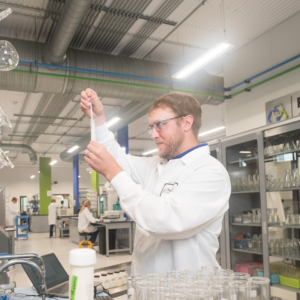
I’ve been with FAL since 2011. Over the years, I’ve seen the laboratory move into a new facility, grow its testing capabilities, and even trade paper-based workflows for more advanced technology. But when I think about what “smarter science” means to me, I keep coming back to the experience and resourcefulness of the people doing the testing.
We’ve got a strong team with diverse experience that knows what it’s like to be in the real world. We understand firsthand the challenges our clients face every day.
A team that knows both sides of the sample
My background includes environmental laboratory testing and working in the ethanol industry. Other members of our team have worked in egg processing, dairy, meatpacking, soybean crushing, and specialty oils. That firsthand knowledge comes in handy when a test doesn’t go as planned.
I remember a recent trial involving a new method for crude fat testing. One of our analysts was having trouble getting the method to work as expected, so she turned to a colleague who had previously worked in meatpacking. Drawing on their previous industry experience, the two worked through the issue together. It’s a good example of a philosophy we take seriously at FAL:
Our industry experience also helps us understand what test results may indicate. I see this in the ethanol samples FAL tests. Our analysts understand the processes behind the samples they’re testing, which can help them spot potential issues. Elevated lactic acid levels, for example, may indicate that yeast experienced stress during fermentation. It’s the kind of observation that can provide useful context when clients/customers are reviewing their results.
Finding answers when test results don’t match
Even with established testing methods, things don’t always go according to plan. Starch testing is one area where we regularly work with clients to investigate discrepancies because it is a particularly important measurement for ethanol producers since starch is the raw material that gets converted into ethanol.
When a client’s internal results don’t match our findings, we start asking questions. Are both laboratories using the same testing method? Could differences in how the corn was ground be affecting the results? Could something have happened during sample preparation? I’ve even seen static electricity cause material to cling to the inside of a test tube and interfere with the testing process.
If there’s a problem, we’ll typically find it. Sometimes it just takes time and effort to uncover the answer. I’ll admit that working through a stubborn testing issue can get challenging, especially when a trial repeatedly fails to produce the expected results. But there’s also a lot of satisfaction in finally figuring it out. We walk away knowing something we didn’t before.
The conversation doesn’t end with the test results
Communication is just as important as troubleshooting. Our clients can speak directly with the analysts who ran their tests and ask questions about anything unusual that came up during testing. When a request is unclear, our client services team follows up rather than guessing what the client needs.
That approach goes all the way back to FAL’s founding. Our founder, Diane Young, experienced the frustration of receiving test results from other laboratories without being able to speak to the people who performed the analysis. She wanted to offer FAL clients something different by giving them direct access to the analysts handling their samples.
Our analysts are available to explain results, answer questions about testing methods, and share observations that may help clients interpret their data. Decisions about production processes stay with our clients, but they don’t have to figure out the testing side of things alone. We see those relationships as partnerships.
Meeting tight deadlines while maintaining high standards
We know that shipments often can’t move until their lab results are ready. Our standard turnaround time is generally five to seven business days, although we often get results back sooner. When a client needs an expedited turnaround, the team may assign multiple analysts to help complete the work. There’s a limit, though. A test that requires two days can’t simply be squeezed into one.
No matter what, even with a rush order, scientific accuracy isn’t going to be in question.
That attention to quality has become even more ingrained in our operations over the years. I remember in the beginning when analysts used to record results on paper bench sheets and use a shared Excel file to organize testing schedules. Only one person could work in the file at a time, which made coordinating the day’s workload a challenge. We currently use a laboratory information management system (LIMS ) to help organize our work and give analysts easier access to testing procedures and documentation.
At FAL, quality is never treated as just another box to check. Every part of the testing process is meticulously examined, from internal audits designed to uncover potential issues, multiple external auditors to maintain certifications for a variety of industries and continual reviews of standard operating procedures/proficiency testing that show alignment with the rest of the industry. The team is equally meticulous about the testing process itself, continually looking for opportunities to add meaningful safeguards, such as daily pipette and balance checks to ensure that data are not biased by analytical measurements.
We’re always looking for ways to strengthen our quality controls, too. We’ve always had quality, and it continues to get even better as we go. A lot of those improvements happen behind the scenes. Our clients may never actually see them, but they affect the results they rely on.
After 15 years at FAL, I still enjoy the challenge of figuring things out. I like to describe our team as a whole bunch of hardworking Iowa farm kids. Many of us have agricultural backgrounds and a hands-on approach to problem-solving. That mindset has stuck with us even as the laboratory has grown. When something isn’t working quite right, there’s usually someone willing to roll up their sleeves and figure out why.
Have questions about your testing needs? Contact the FAL team to discuss your samples, testing methods, or turnaround requirements.